Family sues Aurora officer, city over fatal police shooting of Rajon Belt-Stubblefield
AURORA | The family of a Black man fatally shot by an Aurora police officer is suing the officer and the city, alleging the city has not addressed persistent patterns of racial bias and excessive force in its police department.
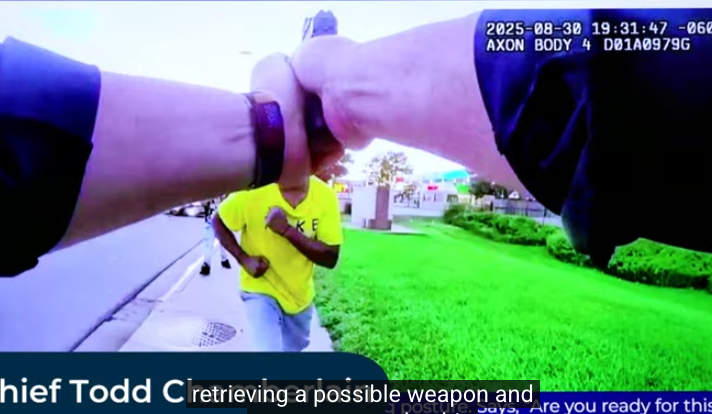
Aurora Police officer Matthew Neely shot and killed Rajon Belt-Stubblefield, 37, in August 2025 after an attempted traffic stop, which led to Belt-Stubblefield driving away and crashing his car. Body camera footage shows Neely arriving at the crash, gun-drawn, and a quick altercation with Belt-Stubblefield, who tosses a gun away from himself, before Neely shoots him three times.
Neely is facing charges of second-degree murder and manslaughter after he was indicted by a grand jury last month. Neely is on unpaid administrative leave, according to the Aurora Police Department.
On Sunday, Belt-Stubblefield’s family filed a civil lawsuit in the U.S. District Court of Colorado against Neely and the city, seeking unspecified monetary damages. The lawsuit alleges Neely violated Belt-Stubblefield’s constitutional rights and wrongfully caused his death. It also claims the city has not adequately addressed the issues of racial bias and excessive force that were identified in a 2021 consent decree.
The consent decree, imposed by the state Attorney General Phil Weiser after the death of Elijah McClain, determined Aurora’s public safety departments had exhibited “patterns and practices” of using excessive force against the public, especially people of color. The decree outlined a host of required reforms to be implemented in the department.
In a press release announcing the lawsuit, attorneys for the family said they are calling for accountability.
A city spokesperson said they are aware of the lawsuit but do not comment on pending litigation.
The lawsuit says Belt-Stubblefield’s death is “not an aberration, and it was not bad luck.”
“It was the predictable product of the Aurora Police Department’s longstanding customs and practices of unnecessary escalation, excessive force, and racially biased policing,” the lawsuit says.
The lawsuit includes a history of complaints against Neely, including for discriminatory traffic enforcement, though the complaints were considered unfounded by the city. It also points to a 2019 Aurora Police Department internal affairs investigation that found Neely had violated some department policies.
Sentinel reporting found that the investigation was prompted after an Arapahoe County judge found Neely and another officer gave testimony that was inconsistent with body-camera video during a hearing in a burglary case. The lawsuit alleges Neely received a 10-hour unpaid suspension for conduct unbecoming an officer and unsatisfactory performance.
In addition to asking a judge to find Neely responsible for constitutional violations and wrongful death, the lawsuit places responsibility on the city for not doing more to respond to the mandates in the consent decree and from the city’s contracted police monitor.
“A municipality that does not know its systems are broken may be careless. A municipality that has retained an independent monitor, received that monitor’s written findings across successive reporting periods identifying the same deficiencies, and has left those deficiencies uncorrected has made a choice about which risks it is prepared to carry,” the lawsuit says.
The city’s police monitor’s comments about the Belt-Stubblefield shooting are also referenced in the lawsuit. The monitor said the situation raises “difficult questions about tactics, deployment, less-lethal options, and APD’s public communications in the incident’s aftermath.”
Body-camera video from the shooting starts when Neely initiates a traffic stop, driving down East Sixth Avenue until he arrives at the Sinclair gas station, near Billings Street, where Belt-Stubblefield is sitting in his car in the oncoming traffic lane after he crashed.
In separate dash-camera footage provided to the police department by a civilian, Belt-Subblefield can be seen swerving and crashing into a vehicle, then hopping over the median in his vehicle and hitting a second oncoming vehicle.
In the body camera footage, Neely gets out of his vehicle and immediately approaches Belt-Stubblefield with his gun drawn and tells him to “stay in your car,” and “don’t move,” while Belt-Stubblefield’s car is smoking.
As he’s still pointing the gun at Belt-Subblefield, the officer tells him to “give me your hands, show me your hands, get your hands up, dude.” Belt-Stubblefield gets out of the car and says “Don’t shoot me.”
After Belt-Stubblefield gets out of the car, he walks away from Neely and throws a gun into the grass.
Neely then grabs Belt-Stubblefield’s shirt and pulls him to the ground, trying to put him into a handcuffing position. There is some commotion that is difficult to distinguish, and then the camera footage shows Belt-Stubblefield getting up, standing over the officer, and then walking away.
The officer gets up and points his gun at Belt-Stubblefield and yells, “Get on the ground, get away from that mother f****** gun” before pushing Belt-Stubblefield.
Belt-Stubblefield looks back at his son, who was following him in a separate car and had walked to the scene, and he tells his son, “Get that shit,” while walking toward Neely. Belt-Subblefield says it about nine more times, while Neely says, “I’ll shoot you.”
Meanwhile, Belt-Stubblefield’s son, behind him, tells them both to “chill.” Belt-Stubblefield turns again to say, “Get that shit,” as the officer punches him on the side of the head. Belt-Stubblefield gets into a fighting stance, saying “Are you ready for this?” a few times.
Neely says twice more to get on the ground, and the last time, he repeats it while backing up onto the street. He then shoots Belt-Stubblefield twice in the chest. As Belt-Stubblefield stops, he stoots one more time at his head, and Belt-Stubblefield drops to the ground.
It takes two minutes for other officers to arrive at the scene and start performing life-saving measures on Belt-Stubblefield.
A few days after the shooting, Aurora Police Chief Todd Chamberlain defended Neely, saying that Belt-Stubblefield prompted the shooting with his behavior.
“I wish that the suspect would have listened to what the officer said,” Chamberlain said during a press conference after the shooting.
Read more At 91, Dale ‘Grey Beard’ Sanders reclaims record as oldest hiker to complete the Appalachian Trail
Read more Aurora prep sports schedule, 9.1.26
Read more Mordecai Brownlee to step down in December as president of Community College of Aurora

