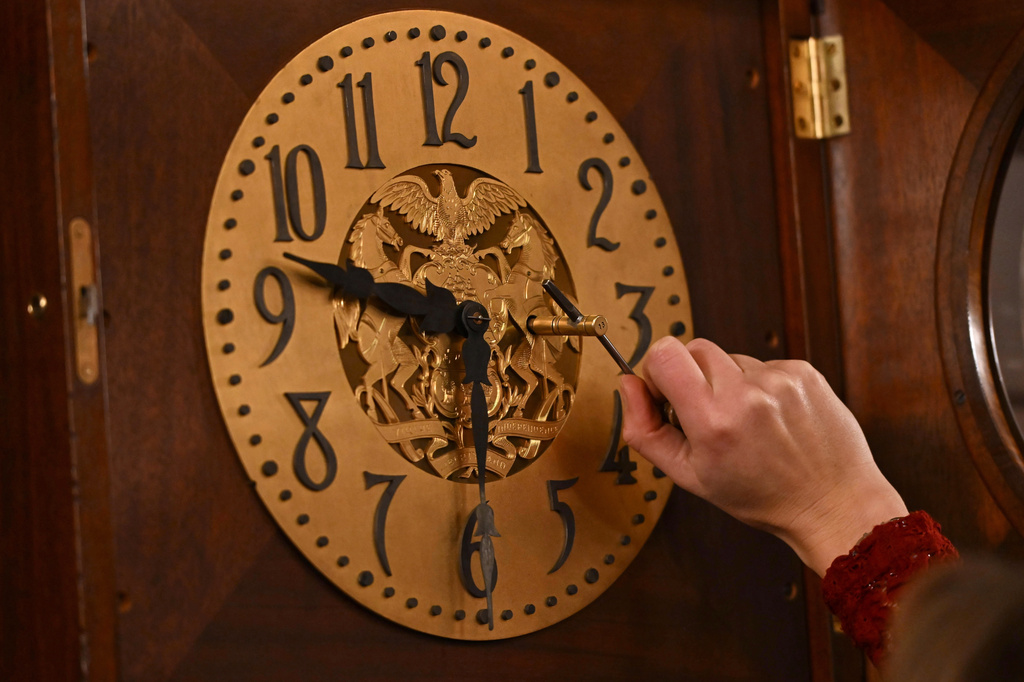
America already tried permanent daylight saving time. It lasted less than a year. Could it work now?
NEW YORK | It’s an idea whose time, as it were, may have come — again.
The twice-yearly changing of the clocks in the United States could be a thing of the past if legislation currently in Congress that calls for permanent daylight time makes it through. But even as annoying as some find the back-and-forth of the time shift in the spring and the fall, that doesn’t necessarily mean sticking to one would go over well. America has tried it before, most recently in the 1970s, and it didn’t last.
Now it’s a new era, one full of people working at home who didn’t before — and advances in sleep science that tell a more nuanced tale.
Could this time (shift) be the charm?
What’s going on this time around?
The House of Representatives on Tuesday voted overwhelmingly to pass a bill that makes the shift to daylight saving time, when clocks are moved forward one hour, become permanent.
Currently, the shift is forward in spring and back to standard time in fall as a way to give people more daylight time in the summer evenings. But the semi-annual change has few fans – an AP-NORC poll last year found that only 12% of American adults were in favor of it, while almost half opposed it. Proponents of a single time include the American Medical Association and American Academy of Sleep Medicine — outfits to whom daily rhythms are deeply important.
The Senate would have to pass it before it could be signed into law. President Donald Trump has indicated he’s supportive.
So just change it. What’s the big deal?
Not so fast. People may not like making the change, but history shows they also don’t like living with even less morning light in the winter months, when daylight hours are shorter than in summer.
In 1973, Congress passed a law instituting permanent daylight saving time for what was supposed to be a trial period from January 1974 to April 1975. It lasted until October, when it was repealed after public outcry. Among the concerns was worry that schoolchildren would have to get to class in darkness. These days, school starting times have started to shift later.
Kevin Birth, a professor of anthropology at Queens College whose research focuses on cultural concepts of time, was in elementary school in Syracuse, New York, at the time and remembers it vividly. “I had to get up for school and it was like it was midnight,” he said. “It was just pitch black and it remained pitch black into the school day.”
If the U.S. decides to try it again, he said, more has to change than just the clocks. The time zones across the country would need to be adapted as well. The current four zones wouldn’t be adequate – they cover so much ground that sunrise comes at different times in western and eastern parts of each zone.
Read more FDA approves a first-of-its-kind pill to cut cholesterol in high-risk patients
Read more Trump administration races the clock to rebuild US tariff wall knocked down by Supreme Court
Read more One Tech Tip: How to soothe thumb pain when texting and scrolling