Aurora lawmakers considers sanctions for council members who violate decorum rules
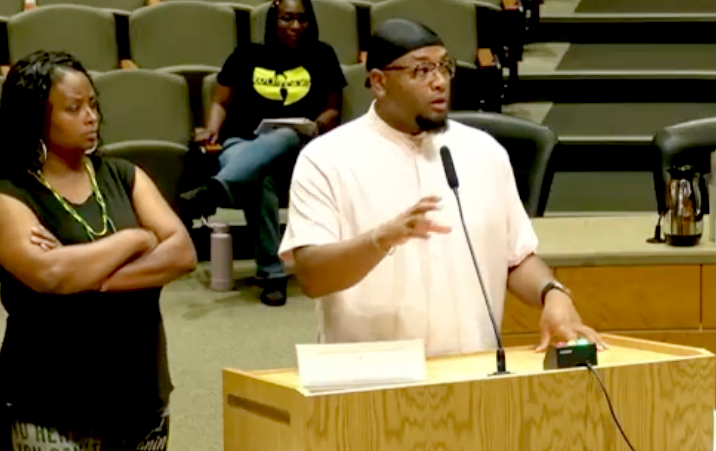
AURORA | Proposed sanctions for council members who violate decorum rules were a sticking point during a study session discussion Monday, though council was supportive of a one-meeting suspension for members of the public who go over the three-minute comment limit.
The council is considering a number of changes to its decorum and meeting rules, including implementing consequences for public commenters and council members who disregard the rules. The proposed changes come from the City Council Rules Committee, which has been discussing the public comment process since March.
On Monday, most of the proposed changes were supported by the council with a handful of exceptions. The most pushback came over potential sanctions for council members who violate rules, including a possibility to require the council member to attend training.
Mayor Mike Coffman and council members Stephanie Hancock, Angela Lawson and Françoise Bergan voiced concerns about politically motivated retaliation using the sanction process. They suggested that the threshold for sanctions should be a “substantial” violation of the rules, not just any deviation.
“This is like we’re going to start, for every violation, someone’s going to keep a little tally on us,” Bergan said. “And then the training — that’s crazy. I’m not going to any training.”
Ultimately, the opposition led the council to delay moving the changes forward to a vote for further discussion.
Currently, the rules only allow the council to enact a censure resolution against a member who violates the rules, though a censure can be brought for any violation of city code, the charter or the rules. A censure vote needs six members to approve it.
Proposed sanctions would allow council to enact a public admonishment, which would be posting the censure resolution publicly, as well as a public reprimand, which could require the council member to receive training or education on top of having the censure resolution posted.
Other possible sanctions include the loss of the member’s travel and training budget, removal from committees, removal from committee chair positions and exclusion from executive sessions.
For members of the public, the city attorney has advised that the council is limited in how it can regulate public comment and can’t prohibit certain kinds of speech, like profanity or name calling, because of First Amendment protections.
Under the proposed rules, if a speaker goes over their allotted time, the mayor will ask the speaker to wrap up and allow them a 10 second grace period. If the speaker continues past the grace period, the mayor will issue a final warning and if the speaker ignores the final warning then the mayor can ban the speaker from public comment at the next meeting. The ban would only last for one meeting.
The proposed protocol has been opposed by some members of the public, who previously questioned whether it’s right for the council to cut speakers off, especially those who may be grieving or emotional.
At least one council member had strong feelings about the proposed changes for speakers. Councilmember Curtis Gardner said he opposes all of the changes because “our rules mean nothing.”
“Our rules are selectively enforced at best and have been for years, so I don’t have any confidence that they will be enforced going forward,” Gardner said.
Gardner said he has been disappointed in the past when people responded negatively to being asked not to use profanity.
“To borrow a word that (public commenters) use, they don’t give a sh**, so I don’t really either,” he said.
In addition to the potential sanctions, new language would set an expectation that council members and the mayor “conduct themselves professionally in their official capacities as elected representatives of the citizens of the city.” Council members would also be encouraged to attend meetings in person.
Two other proposed changes to the council meeting order were rejected on Monday. One suggestion was to move council members’ reports up in the meeting order before public comment and the other would have added a 30 minute comment period dedicated to speakers 18 and younger.
Council decided instead to keep the reports section at the end of the meeting and to prioritize youth speakers during the meeting’s initial one-hour comment period. The second comment period at the end of the meeting will also remain one hour.
Additional proposed decorum changes include:
- Limiting participation in the second one-hour comment period to people who haven’t spoken yet
- Limiting council reports to three minutes
- Removing the restriction on only one person being allowed at the podium during public comments
- Requesting speakers to give their legal name, whether they’re a resident and what ward they live in
- Requiring meeting agendas to be posted five days in advance of the meeting
- Allowing more flexibility for scheduling study sessions
Lastly, changes would prohibit the city from spending money to support or oppose ballot initiatives and adjust rules for council travel budgets.
Read more Why Choose Milestone Relocation as Your North Carolina Movers?
Read more Moving Help for Any Situation
Read more Aurora History Museum opens exhibit showcasing Black history across Colorado
