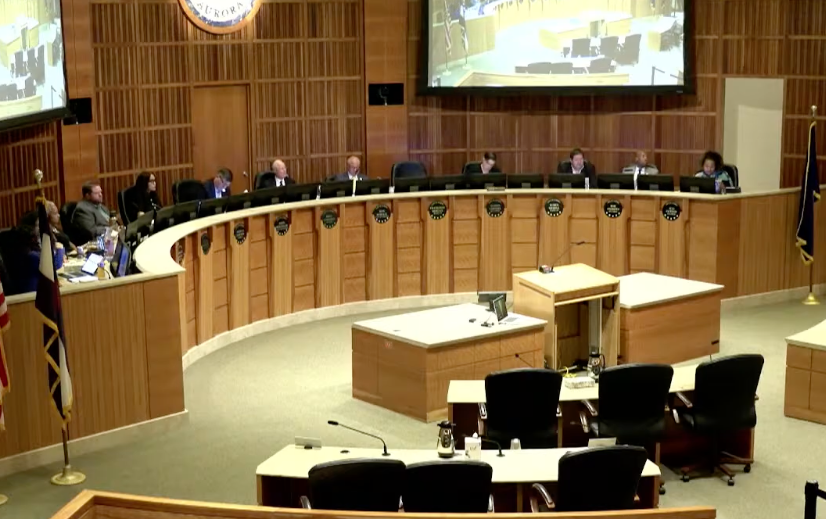
Aurora Council mandates committee review for new city policies before going to council floor
AURORA | New city policies will now be required to go through council committees before they reach the council dais unless certain emergency circumstances apply.
On Monday, council narrowly voted 6-5 to approve the procedure change forcing new legislation to start at committee with few exceptions. Councilmembers Alison Coombs, Gianina Horton, Alli Jackson, Ruben Medina and Amy Wiles opposed the change. Mayor Mike Coffman provided the tie-breaking vote in favor.
Councilmembers Stephanie Hancock and Rob Andrews sponsored the proposal to route all policy decisions first through council committees before it comes to a study session or council meeting. Exceptions can be made for emergencies, such as a public health or safety incident, legal concerns or a significant negative budget impact.
Coombs said she previously supported the change because of the increased time for public input, but on Monday, she raised concerns about needing a supermajority of votes to bring items directly to council meetings.
“Removing that prerogative potentially allows a minority to gatekeep the city council process and prevent items from moving forward in a timely manner,” Coombs said.
Horton reiterated her issues with the protocol requirements not providing enough flexibility to respond to fast-moving situations and called the process “rigid.”
Coffman defended the process by pointing to the fact that proposed legislation will move from committee to study session and regular meetings, regardless of the committee recommendation.
“It still doesn’t require passage in a policy committee or study session to be able to go to the floor for a vote, but what it does require is more utilizing the process whereby things can be heard at the policy committee level, which I think is very important,” Coffman said.
In response, Hancock advocated for the protocol to prevent legislation from getting crammed through without consideration.
“In order for us to do things properly, it is to go through policy committee so that we can vet the items, discuss them, make changes, make amendments so that by the time they get to study session and get to the floor, we have already come to a consensus,” Hancock said. “That is the spirit of this.”
Prior to the change, council members could bypass committees and send policies straight to study sessions and council meetings for a quicker vote. Under the new protocol, policies would need to meet one of the outlined exceptions and get approval from two-thirds of council members to skip committee meetings.
The protocol would also prohibit policies that have been through the appropriate processes from being removed from an agenda, unless the sponsor agrees.
At the Oct. 12 study session, Hancock said the process ensures that policies are receiving due consideration and council members have a fair chance to voice concerns or ideas and make amendments before having to vote.
“Rather than have us have these lengthy discussions on the floor, we can have them in policy meetings, then make changes that are acceptable both to all the members that are on the committees and in study session,” Hancock said. “This is where that should actually happen.”
Andrews agreed, adding that sending policy to committees first also gives more time for public engagement and participation on controversial topics.
“From a policy perspective, we want to make sure that we go through committee and study sessions so we can deliberate and have conversations and then take it to the floor so we have time to talk and the public gets to know about it,” Andrews said. “I fear that emergency resolutions don’t allow the public to respond quickly enough to some of these issues.”
Read more Localized ceasefire brokered by Melania Trump starts as Nordic leaders speak to Putin and Zelenskyy
Read more Appeals court declines to block California from counting 20,000 disputed ballots
Read more Trump administration asks Washington to set aside ballots from 400 voters it says may be noncitizens
