PERRY: State legislators run the home-school gravy train off the taxpayer tracks, finally
As if there’s a shortage of jaw-clenching news about government spending, programs and weirdness, check this out.
Colorado’s dalliance with publicly funded homeschool enrichment programs has hit a wall of “really?” that channels Donald Trump’s entitled obsession with gilt and galore. State-taxpayer-funded fun clubs and activities for homeschool kiddos have even reached Trumpian Ballroom proportions, according to an astounding investigation by Colorado Chalkbeat reporter Ann Schimke.
Thankfully, state lawmakers and Colorado education officials are finally acknowledging that the ERBOCES “fun school” operation in Monument has become a loophole-fueled machine that funnels millions of public dollars into programs that look less like education and more like subsidized lifestyle choices.
We’re not talking a couple of million bucks here.
According to Chalkbeat’s reporting, Colorado spends more than $100 million each year on about 19,000 students participating in part-time public school enrichment programs. Most are homeschooled students who attend only a fraction of the instructional hours required of traditional public school students. Yet these programs receive roughly half of the state’s full per-pupil funding amount — about $6,000 per student.
The news and the math should make every taxpayer’s blood pressure rise.
As state Sen. Jeff Bridges pointed out in the story, the state is effectively paying twice as much per instructional hour for many homeschool enrichment students as it does for children attending traditional public schools full-time.
And what do taxpayers get for investing education tax dollars into this scheme?
Not math skills. Not literacy interventions. Not badly needed expanded science laboratories.
Nope. In many cases, taxpayers are underwriting activities that public school districts could never politically justify providing to every student.
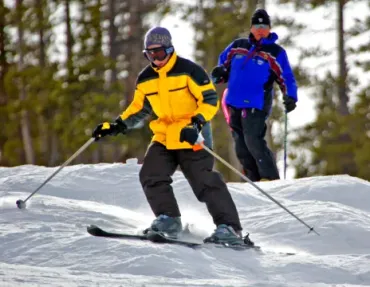
The Chalkbeat story cites state-funded offerings that include horsemanship, taekwondo, golf, skiing and canyoneering trips.
Please.
I’m an avid downhill skier who believes the sport builds a long list of valuable skills. My parents paid the Jeffco Recreation District for me to learn to ski with a busload of financially struggling suburban kids who thought it all sounded like fun. “Tow tickets” at the time were relatively pricey then at about 3 bucks.
Horseback riding is cool, but it’s not a fundamental educational necessity. Martial arts instruction is not a constitutional obligation of Colorado taxpayers.
These are premium activities and they cost premium prices.
In virtually every Colorado school district, activities like skiing, golf, specialized camps and other expensive recreational programs are funded through parent fees, booster clubs, fundraising campaigns and private contributions. Students who cannot afford those activities are often assisted through “scholarships,” fee waivers or community support programs.
That’s how extracurricular opportunities have traditionally worked because there’s not enough money for public education to pay for even the most important parts of public education.
What has never been accepted is the idea that taxpayers should provide premium recreational opportunities to a select group of students while millions of dollars remain unavailable for the broader student population.
Strong public schools benefit everyone.
They create better-informed citizens. They strengthen local economies. They reduce crime. They improve public health outcomes. They build stronger communities and a more productive workforce.
Colorado’s public school system is one of the state’s most important civic institutions because its benefits extend to all of society.
Homeschooling families have every right to choose a different educational path. Colorado law allows parents to educate their children outside traditional public schools, and many families do.
But that choice has always come with the requirement that if parents withdraw from the public education system, they assume responsibility for providing and funding any alternative they prefer.
The ERBOCES model turns that principle upside down.
Instead of supporting public schools accountable to local voters, elected school boards and state education standards, taxpayers are increasingly financing programs operated by private contractors and organizations beyond the direct oversight traditionally applied to public schools.
That is antithetical to the philosophy of public education.
Lawmakers appear to be finally reaching the obvious conclusion.
The Joint Budget Committee’s unanimous decision to pursue legislation limiting ERBOCES’ statewide reach was a welcome first step.
If homeschooling parents want their children to participate in sports, enrichment activities, clubs, field trips and specialized programs, they already have two perfectly reasonable options. They can participate through their local public schools when available. Or they can pay for those opportunities themselves, just like countless public-school families do every day.
The ERBOCES gravy train has run long enough. It needs to stop here.
Follow @EditorDavePerry on BlueSky, Threads, Mastodon, Twitter and Facebook or reach him at 303-750-7555 or [email protected]
Read more THURSDAY NEWS IN A RUSH: Top headlines in today’s NewsMinute video
Read more Pikes Peak State College exit threatens controversial ERBOCES co-op
Read more Aurora moves ahead with push to enforce rental standards with new registration program
