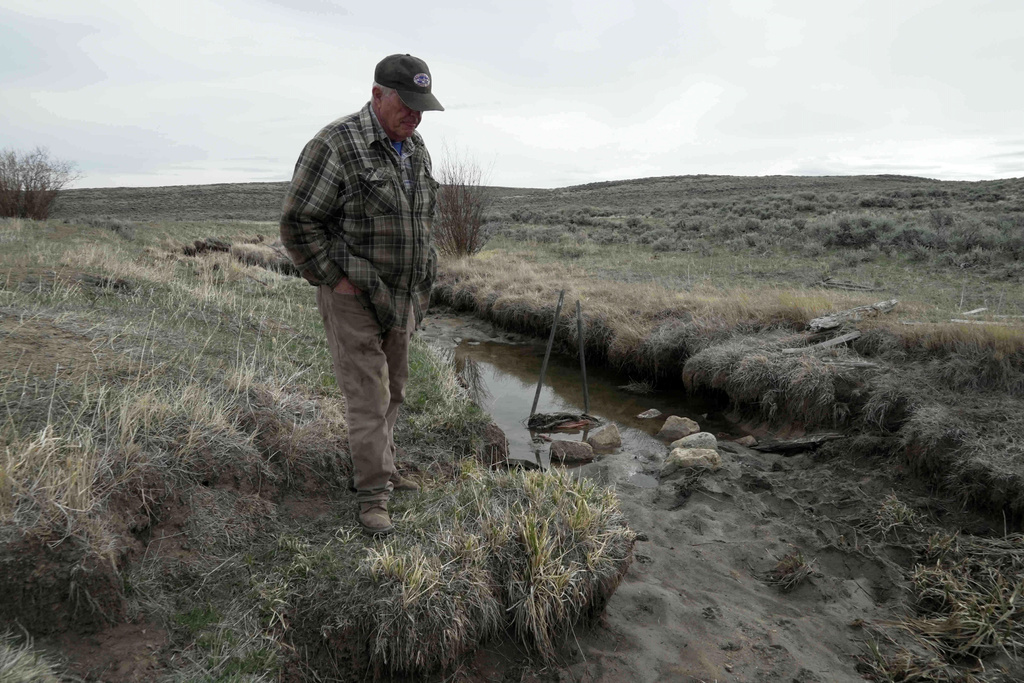
Aurora water restrictions remain unchanged as statewide drought conditions worsen
AURORA | An increase in severity of a statewide drought declaration yesterday does not immediately affect watering restrictions already in place in Aurora, city officials said Friday.
Gov. Jared Polis on Thursday declared a statewide drought emergency and activated Phase 3 of the state’s drought response plan, citing worsening conditions fueled by record-low snowpack and prolonged warm temperatures. City water officials, however, said the statewide change is a signal that Aurora water users need to closely observe local restrictions.
Polis’ announcement follows recommendations from the Colorado Drought Task Force and the Water Conditions Monitoring Committee after months of monitoring drought conditions across the state.
“Today I am issuing a statewide drought emergency to support Coloradans, our economy, farmers and ranchers, and outdoor enthusiasts in the face of one of the most severe droughts in Colorado’s recorded history,” Polis said in a statement.
The declaration allows the state to take additional emergency response measures, including potential emergency funding for unmet needs, possible requests for federal disaster assistance and reductions in outdoor water use at state facilities.
According to the U.S. Drought Monitor’s June 4 report, all 64 Colorado counties are experiencing at least abnormally dry conditions. Nearly 93% of the state is classified in moderate to exceptional drought.
“Activating Phase 3 is a message to Coloradans that our drought conditions are serious and gives the state additional flexibility to address unmet needs and continue supporting communities as conditions evolve,” said Dan Gibbs, executive director of the Colorado Department of Natural Resources.
The declaration does not automatically trigger new local watering restrictions.
In Aurora, city water officials said customers will remain under existing Stage 1 drought restrictions. Those rules limit outdoor watering to two days per week and prohibit watering between 10 a.m. and 6 p.m.
Aurora Water officials said the city’s vast, statewide storage system is currently about 56% full but acknowledged that drought conditions remain a statewide concern.
Officials encouraged residents to continue conserving water and following existing watering restrictions.
“The Governor’s declaration highlights the severity of drought conditions across Colorado and reinforces the importance of water conservation statewide,” the statement said.
Lauren Ris, director of the Colorado Water Conservation Board, said the state has spent years helping communities improve drought resilience and that the declaration will help ensure agencies remain coordinated as conditions worsen.
“This declaration is an important step that ensures Colorado remains prepared, coordinated, and responsive as drought impacts continue to intensify across the state,” Ris said.
State officials said Colorado recorded its lowest snowpack accumulation season on record. May 1 streamflow forecasts projected runoff between 21% and 37% of median levels across Colorado river basins. The current water year, which began in October 2025, has also been the warmest on record in Colorado, contributing to early snowmelt, low river flows, diminished soil moisture and elevated wildfire risk.
Phase 2 of the state drought response plan was activated in March and formally convened the statewide Drought Task Force. Under Phase 3, the task force will meet regularly to monitor conditions, coordinate response efforts and evaluate requests for additional support.
Aurora Water Restrictions highlights
• Outdoor watering is limited to two days per week on assigned days. Watering is prohibited between 10 a.m. and 6 p.m. Water schedules for Aurora addresses is at www.AuroraGov.org/drought
• Drought surcharges of $2.15 per 1,000 gallons will apply to water use above 110% of a customer’s winter quarter average, after normal “tiered rates” are applied.
• No fountains or other outdoor water features.
• Installing so-called cool-season turfs, such as blue fescue or Kentucky bluegrass, whether by sod rolls or by seeding the ground, is prohibited. Instead, so-called warm weather grasses, such as Tahoma 31 Bermuda grass, is allowed.
• Residents and businesses cannot fill private swimming pools, but “topping off” already filled pools is allowed.
• Water at restaurants is only served by request.
• Report water restriction violations and waste at AuroraGov.org/ContactUs
Read more Putin says Russia will bolster its air defenses in response to Ukrainian drone attacks
Read more Hezbollah rejects latest ceasefire agreement as Israeli strikes kill 4 in Lebanon
Read more Meckler, Madrigal each have 4 hits in the Angels’ 11-4 win over the Rockies
