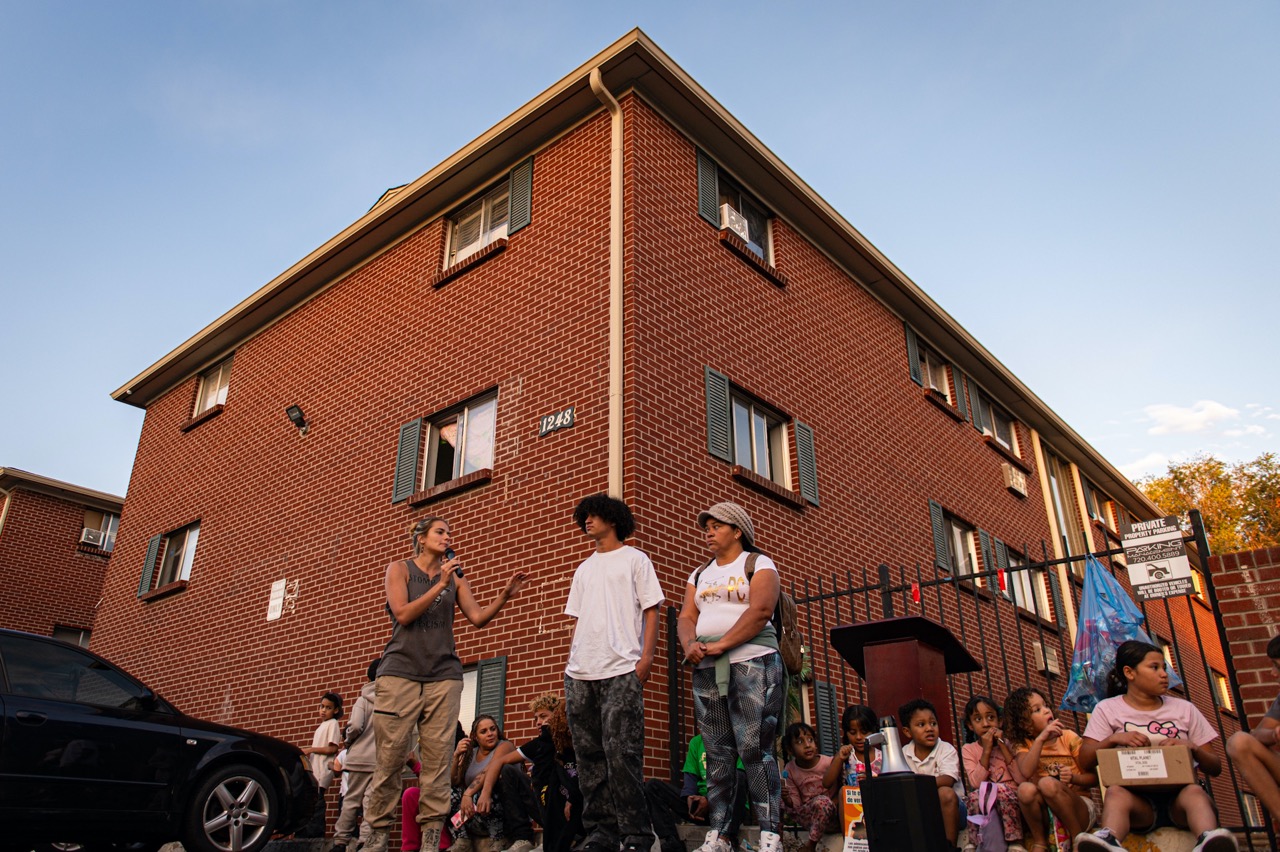
Nonprofit group aims to turn notorious Edge at Lowry apartments into affordable housing
AURORA | A community nonprofit hopes to bring new life to the notorious Edge at Lowry apartments, the complex at the center of a 2024 national controversy over unsubstantiated allegations of a Venezuelan gang takeover.
The East Colfax Community Collective purchased the Edge of Lowry apartments in June for $4.45 million with the intent of rehabilitating the property and turning it into affordable housing, according to a representative of the collective.
“It’s a really powerful opportunity to reclaim and revive a property that has long been a toxic asset in the community and a source of harm in the community and turn it into something positive, into community-controlled affordable housing,” Carson Bryant, a director for the East Colfax Community Collective, said. “The redemption arc opportunity here is really strong and is exactly the kind of project we’re interested in pursuing.”
Earlier this year, the city settled a lawsuit against the property’s former owner, CBZ Management, over the uninhabitable conditions of the units.
The lawsuit was spurred by the city shutting down three northwest Aurora apartment complexes, including the Edge at Lowry, deeming them unlivable for a period of time. CBZ blamed the condition of the apartments, without evidence, on Venezuelan gangs. The allegations drew national media attention and that of then presidential-candidate Donald Trump.
In a statement to the Sentinel, Mayor Mike Coffman said the collective purchasing the property is the “best outcome that we could have hoped for.”
“I’m elated that CBZ and its affiliate LLCs no longer have ownership of the Edge at Lowry and a nonprofit, with a conscience for the surrounding community, will be purchasing the property,” Coffman said.
The East Colfax Community Collective has had ties to the building since the 2024 controversy, when the organization helped relocate the apartment’s former tenants to new housing.
Bryant said the collective hopes to invest between $10 million and $12 million to take the buildings down to the studs and put in all new units. The Edge at Lowry currently comprises 60 units across five buildings.
“In effect, what we’re trying to do is put new units in an existing shell, so we will retain the existing structure, but replace everything inside the building,” he said.
The collective is in the process of gathering funding and applying for tax credits for the rebuild. Bryant said the rehab is contingent on successfully obtaining the tax credits.
Bryant said the collective believes there’s an urgent need to address the apartments.
“If we didn’t buy it and do all the things that we’re doing to it, the alternatives don’t really look good,” he said. “I think the most immediate alternative scenario is that it would just sit vacant and blighted for the foreseeable future or some other investor would come in and do the bare minimum to make it habitable again, continue to operate it as low quality housing, and that just brings everyone back to square one.”
The collective purchased the property through its Mixed-Income Neighborhood Trust, which aims to acquire property to preserve housing and stabilize rent, Bryant said. The trust received loans from the Impact Development Fund, the Colorado Trust, the Denver Foundation, Trust Neighborhoods and the Colorado Health Foundation to purchase the Edge at Lowry property.
The trust’s first purchase was a Denver apartment building at 1371 Xenia St. in 2024. The trust is also in the process of purchasing another apartment building near the Xenia property, Bryant said.
Bryant said the Edge at Lowry is a unique project for the trust because it’s not currently occupied and needs more extensive renovations than the building on Xenia Street did, which was occupied when the trust purchased it.
Not only will the building need serious renovations, Bryant said the collective is working to engage with the community to turn around the reputation of the apartments. The collective is also working to offer former residents the chance to move back once the rehab is completed.
“We’re trying not to dwell too much on the previous narratives around gangs, but really focus on how this is an opportunity to turn around a property that was severely neglected,” Bryant said. “It’s not only the substance of the project, and really walking the walk of delivering something new, it’s telling our story to media and telling our story to residents.”
If the collective secures tax credits, Bryant said construction could start next summer and aim to be completed in 2028.
Read more Comedian Bill Maher wins Twain humor prize as the Kennedy Center navigates Trump-era upheaval
Read more Khadijah Farrakhan, ‘first lady of Nation of Islam’ as wife of famous pastor, dies at 90
Read more Colorado Democrats see surge in primary ballot returns
