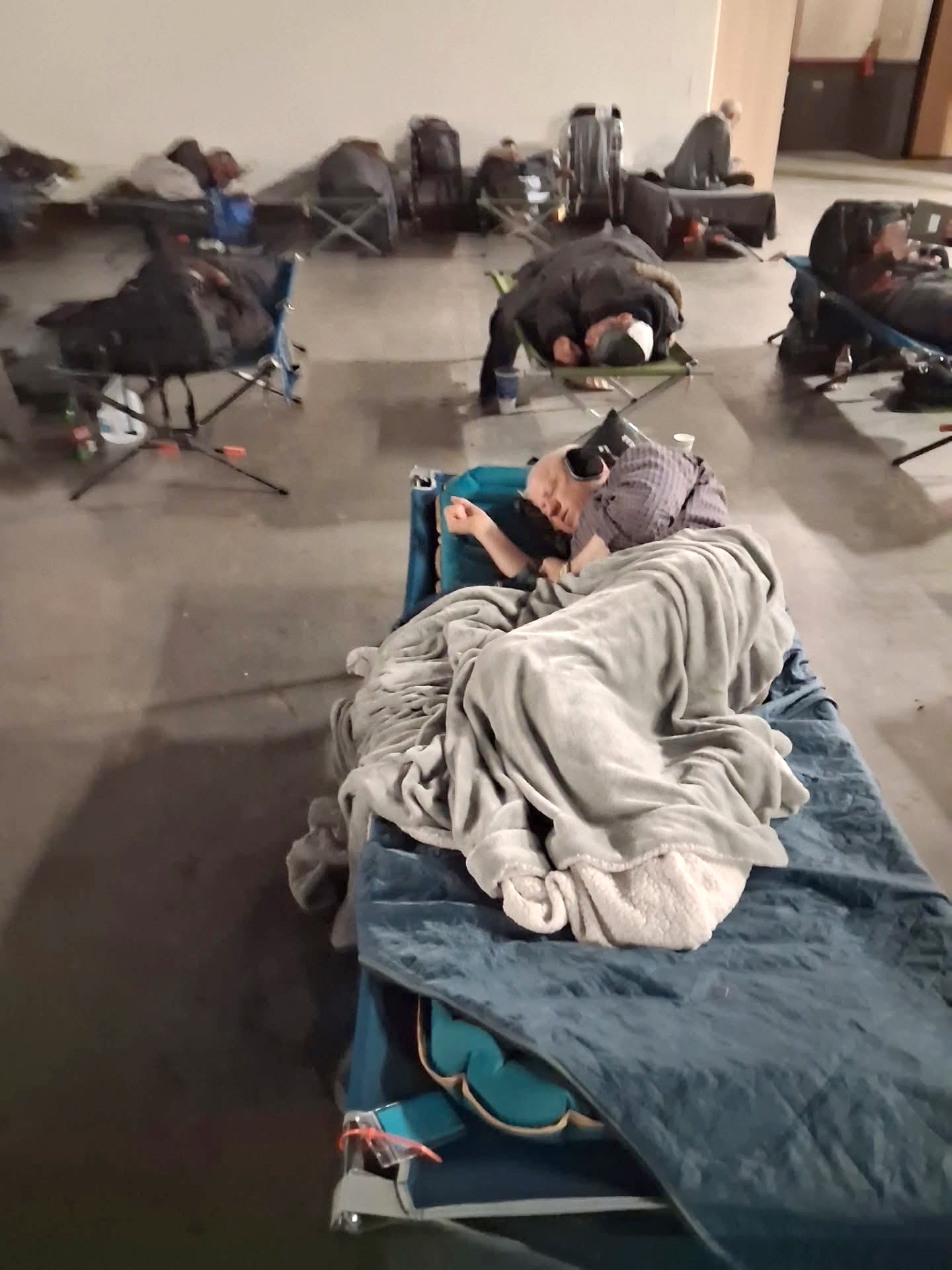
FIRST PERSON: Mayor Coffman sleeps at Aurora homeless shelter to gain insight
AURORA | An elderly woman struggling with her mental health, a day laborer with inconsistent work and a man who lost his job and then his apartment are just a few of the people that Mayor Mike Coffman has gotten to know over the last few months during his overnight weekly stays at the Aurora Regional Navigation Center.
Since late February, Coffman has spent his Friday nights and Saturday mornings at the Navigation Center’s Tier One overnight shelter for homeless people. He doesn’t bring much with him because the shelter provides him with a blanket and a cot for the night — in the same spot every week — and he says “everyone sleeps in their clothes.”
The center offers a tiered system with additional benefits at each level. Tier One offers basic shelter services, Tier Two requires engaging with case managers and peer coaches and Tier Three offers long-term, independent living with additional commitments, including a requirement to hold a full-time job.
It was loud at first, but he has gotten used to the occasional din of barking dogs and the ambient sounds of dozens of men on cots. The noise is easier to overcome than the discomfort of wearing noise-canceling headphones, Coffman said.
In the mornings, Coffman hands out milk as part of the breakfast available for Tier One guests.
His experience at the shelter has been eye-opening, he said.
“One thing I’ve learned is how complex everything is, and individualized,” Coffman said. “You can’t categorize people in any particular group. You have to see them as individuals. Quite frankly, it’s made me more compassionate.”
Coffman said he started sleeping at the shelter because he wanted to see how the Navigation Center’s services were working and find out where improvements could be made.
Earlier this year, several people staying at the shelter told the Sentinel about issues ranging from plumbing failures and mold concerns to inconsistent rules, lack of services and difficulty advancing through the shelter’s tiered system. Since then, the city and Navigation Center have been working to address complaints.
During his weekends at the shelter, Coffman has seen the system help a lot of people, especially those needing job training and housing assistance, and he believes in the ability of the Navigation Center to adapt to the needs of the people it’s serving.
However, he also has concerns that people are falling through the cracks because of the shelter’s limited capacity, particularly when it comes to people with more severe mental health and substance abuse needs. Coffman said the shelter receives “really hard cases from throughout the metropolitan area.”
“What I’m really trying to get out of this is who can we partner with? No one entity can be all things,” he said. “We need to refer the more serious mental health and addiction cases because we don’t really have the capacity to deal with those.”
The Navigation Center also serves a number of older clients, including some with disabilities, who would benefit from dedicated housing, Coffman said. He said he plans to set up meetings with the Aurora Housing Authority and Aurora Mental Health and Recovery to strengthen those partnerships and expand resources where possible.
The Navigation Center already works with both agencies, as well as several other community organizations to address things like healthcare, dental services, getting identification documents, applying for benefits and finding work.
Currently, the center serves an average of around 300 people per month in Tier One and Tier Two, according to a June update to the city’s housing committee. Tier Three, which includes 12 people, has been limited because of ongoing mold mitigation in the designated rooms.
Coffman said he’s watched people move through the tier system successfully and thinks Tier Two is particularly effective, but added that the system isn’t working for everyone.
“What I’ve observed is there are people that are just allowed to exist (in Tier One) and it seems up to them, so long as they obey the rules, that they could stay at that level and that’s not the intention of the program,” he said.
In addition to spending some nights at the Navigation Center, Coffman has been having conversations with the center’s staff, including case managers, and learning about the center’s intake process and resource capacity.
Coffman said he may propose changes to the case management process, such as adding a timeline to Tier One so people are incentivized to engage with the resources available.
“I’ve come to the conclusion that we need a time limit on Tier One just to understand where these cases are, so nobody just disappears,” he said.
Adding a time limit to Tier One would alter the shelter’s model, which is currently a “hybrid model” offering the “no strings” shelter, as well as the work-first housing in Tier Two and Tier Three.
“The whole goal of the program is about taking people to the highest level of self-sufficiency that they are capable of and that’s going to be different for everybody,” Coffman said.
Cathy Alderman, chief communications officer for the Colorado Coalition for the Homeless, said a time limit for shelter stays is only effective if supportive services are available for people to utilize.
“That kind of stipulation or requirement is only as good as the resources that you have to offer that person as they leave,” Alderman said. “When we know that our communities have very few helping resources, especially for those with the lowest income and living on fixed incomes, then I think it’s pretty unreasonable to expect that that person is going to be any better off leaving the shelter than they were when they first needed the shelter services.”
Alderman said the coalition supports the Navigation Center’s “one stop shop” model to help connect people to services and housing. She said she wouldn’t be opposed to adding a time limit if data showed that would help more people receive services, but noted that hasn’t been the case yet.
“I’ve just never seen data that says imposing restrictions on people who have nothing, they’re somehow going to access everything within 30 days,” she said. “All the models say that you really need to make an investment in people on a long-term basis in order for them to stabilize, and that’s how you solve homelessness.”
When Coffman compares his Fridays at the Navigation Center to his previous attempt to learn first-hand about homelessness by temporarily camping outside and in shelters for a week in 2021, he said his consistent presence at the shelter has given him a different perspective.
“The people I see are much more desperate, it’s not a fad,” he said. “So one thing I learned is just how easy it is to lose your housing and how hard it is to get it back.”
Coffman’s past attempt drew widespread backlash from fellow elected officials and homelessness service advocates, especially a comment Coffman made to CBS4 calling homelessness “a lifestyle choice.” The episode earned the mayor a media moniker of “Homeless Mike.”
Researchers and experts say the causes of chronic homelessness are complex and can include poverty, mental illness, substance use, loss of employment, domestic violence, lack of affordable housing, medical expenses, criminal record and loss of family.
Coffman said he plans to continue sleeping at the shelter weekly until he feels “the system has adjusted to make sure that we’re meeting the challenges of everybody in Tier One and not forgetting people.”
Read more Spring Sports All-Aurora 2026: Full Aurora Sentinel All-Aurora Boys Swim Teams
Read more Former state CBI analyst pleads guilty in DNA testing scandal, faces up to 16 years in prison
